
On December 5, 2025, the NATO Defense College Foundation (NDCF) held a high-level conference called “NATO in the South: Strategic Reflections and Cooperative Security,” co-organized by ICEED and the Ministry of Foreign Affairs and International Development of Italy, among others. The NDCF is an independent, international think tank affiliated with the NATO Defense College, supporting NATO, its members, and partners through high-level dialogue, strategic research, and tailored training for decision-makers.
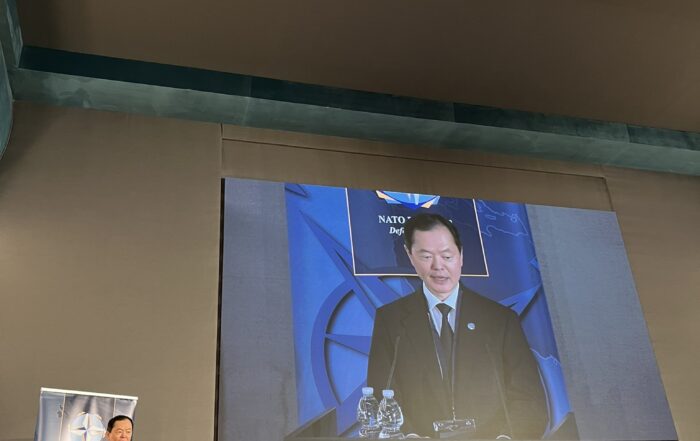
In his welcome remarks, Ken Kitatani, Governance Officer of the Board of Directors of ICEED, emphasised that security cooperation, climate forecasting systems, AI governance and cyber resilience are crucial to prevent conflict risks, especially at a time when the stability of the ten countries that comprise the Southern Neighbourhood is directly linked to stability elsewhere in Europe and the world as a whole.
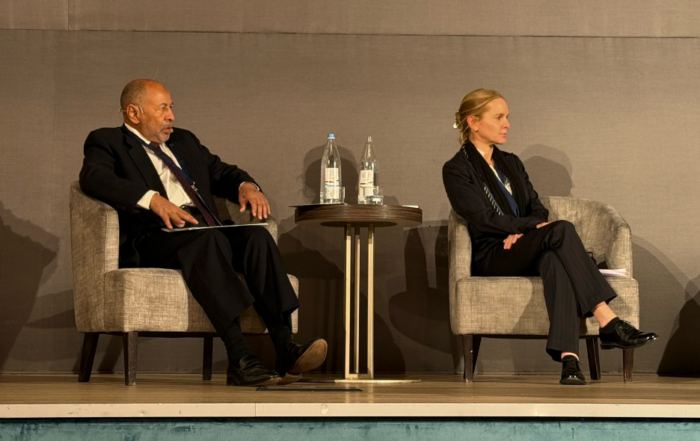
- The Southern Neighbourhood is highly diverse and cannot be approached with one-size-fits-all solutions.
- Security developments across the region are increasingly interconnected.
- Effective partnerships depend on cooperation built jointly with local partners, rather than externally designed templates.
Since the mid-1990s, NATO has worked with partners across its Southern Neighbourhood—covering the Middle East, North Africa and the Sahel—through cooperation frameworks, such as the Mediterranean Dialogue and the Istanbul Cooperation Initiative (ICI) from 2004. These partnerships were reaffirmed in later NATO summits. More recently, NATO’s 2022 Strategic Concept adopted a broader “360-degree” approach, recognizing that developments in the South matter for Euro-Atlantic security, particularly in areas such as trade routes, energy flows, and digital infrastructure.
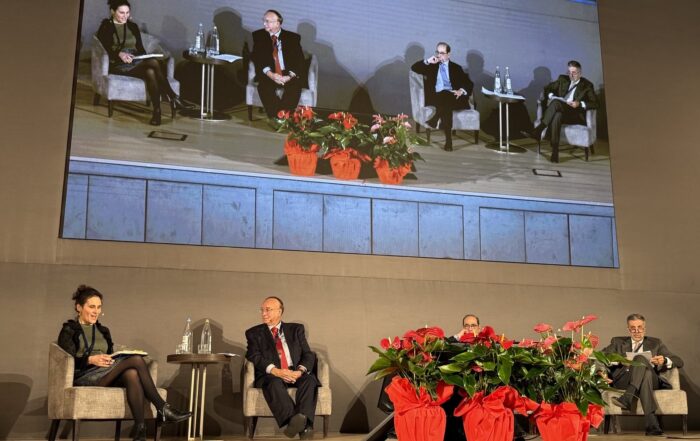
The conference featured two keynote speeches and three thematic panels, organized around how NATO is adapting to a changing security environment in the South.
Discussions explored how NATO balances attention between threats on NATO’s Eastern flank and challenges emerging from the South; how governance weaknesses, shifting partnerships and the growing influence of regional actors are reshaping security in the Sahel and Maghreb; and how NATO and European allies are strengthening practical cooperation through initiatives such as the Southern Neighbourhood Action Plan (SNAP), closer EU–NATO coordination, and improved early warning mechanisms.
Participants included NATO and EU officials, government representatives and diplomats from Southern Mediterranean and Gulf countries, academics, and industry representatives. Across the panels, three recurring messages stood out:
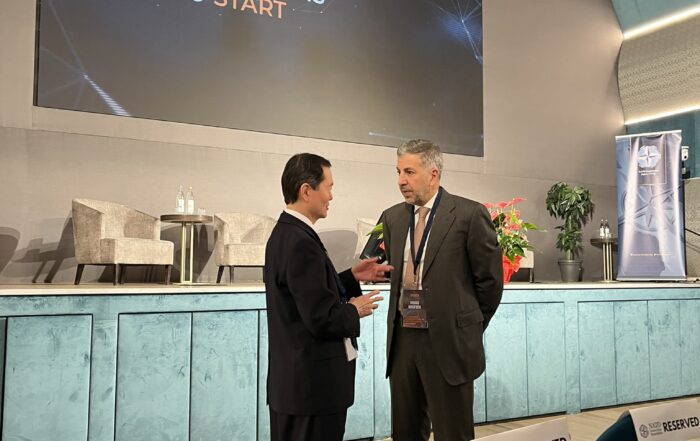
Speakers also highlighted growing risks to undersea cables, shipping routes, and energy infrastructure, reinforcing how closely developments in the South are linked to Euro-Atlantic security. Recent steps, such as the appointment of a NATO Special Representative for the Southern Neighbourhood and the opening of a liaison office in Amman, Jordan, were cited as efforts to turn this strategic focus into practical engagement.
At the same time, the EU has expanded its own engagement through new institutional structures focused on the Middle East and the Mediterranean region, pointing to shared concerns and overlapping priorities. In this context, closer NATO–EU cooperation was widely seen as increasingly important, especially for European countries directly affected by developments in the region.
Overall, while the conference addressed difficult and evolving security questions, it helped clarify areas of shared concern and common priorities among participants from different backgrounds, contributing to a more aligned understanding of cooperative security in NATO’s Southern Neighbourhood.